
A study by Amazon Ads reveals that nearly 87% of Indian small and medium businesses (SMBs) believe AI has opened up new advertising opportunities, including streaming TV. The research indicates that 75% of surveyed SMBs attribute business growth to AI-enabled advertising, with 68% noting increased creativity. AI is also facilitating international trade for 59% of businesses, though human oversight remains crucial in decision-making.

State Bank of India (SBI) is developing an innovative solution to assess the creditworthiness of small businesses lacking GST registration by utilising UPI transaction data. This initiative aims to provide end-to-end digital loans within a day, addressing the financial exclusion of many small enterprises.

Infosys co-founder Nandan Nilekani predicts that large corporations in India will lose jobs due to automation and AI, while millions of small businesses will drive future employment growth. He advocates for deregulation, simplified business interfaces, and digital platforms to support small entrepreneurs and a gig economy workforce.
Infosys co-founder Nandan Nilekani has dismissed fears that artificial intelligence will lead to job losses in India's IT services sector, calling such concerns "hogwash" and "disaster marketing." Speaking at the Bloomberg New Economy Forum 2026, Nilekani argued that AI will actually increase demand for IT firms as it necessitates complex business transformations and creates new types of jobs, particularly in small businesses.

A World Bank report, 'The Promise of Artificial Intelligence', states that AI presents a historic opportunity for low- and middle-income countries to overcome development challenges, despite many being unprepared. It advises these nations to adopt and adapt existing AI tools rather than focusing on building frontier models immediately. The report also notes a significant gap in AI adoption and job automation between high-income and developing countries.

AI agent platform Runable has successfully raised $21 million in Series A funding, co-led by Susquehanna Venture Capital and Nexus Venture Partners. The company plans to use these funds to expand its growth capabilities, enhance measurement tools, and scale its Runable Academy, which supports small business owners in building and growing their ventures.

Wadhwani AI is working on a 'vulnerability mapping' project which determines the probability of a disease breaking out in a particular area during a particular season or time.

Meta announced a first-of-its-kind initiative called 'WhatsApp Bharat Yatra', where the company will go to Tier-II and Tier-III cities to provide on-ground, in-person training to small businesses.

India has secured a spot among the top 10 leading emerging-market performers in artificial intelligence (AI) readiness, with private investment in AI more than tripling to USD 4.1 billion in 2025, according to a new World Bank report.
A World Bank report highlights how Artificial Intelligence-powered weather forecasts have enabled small farmers in Telangana, India, to save up to USD 560 by adapting their farming practices to specific risks. The report, "The Promise of Artificial Intelligence," advocates for developing countries to rapidly adopt small, low-cost AI tools to enhance productivity, improve government services, and avoid missing out on the AI revolution.

'Applying AI to change the lives of Indians and at population scale -- just like we did with DPI [digital public infrastructure] -- is really where it's going to go.'

A trade body in Jharkhand, FJCCI, has urged the Union Finance Minister to withdraw the proposed 0.4% Merchant Discount Rate (MDR) on UPI transactions above Rs 2,000 for merchants. The body argues that this charge will significantly increase operating costs for businesses, especially MSMEs and retailers, who rely on the current zero-MDR regime for digital payments.
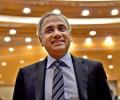
Infosys CEO Salil Parekh stated on Tuesday that the company's AI services, currently contributing over 8% of revenue, are growing rapidly and could account for almost half of its work within two to three years. He highlighted the strong demand for AI services, the company's hiring and training efforts for graduates in AI, and discussed potential risks like infrastructure challenges and societal backlash.
The Kerala Legislative Assembly has passed a motion urging the central government to completely withdraw the proposed Merchant Discount Rate (MDR) on UPI transactions exceeding Rs 2,000. Chief Minister V D Satheesan and CPI MLA K Rajan highlighted concerns that the MDR would increase business costs, harm small businesses, and reduce the appeal of digital payments, while the BJP argued it would not affect general public or small merchants.
Nandan Nilekani, co-founder of Infosys, has urged for the expanded adoption of the Account Aggregator (AA) framework to facilitate formal credit access for self-employed individuals and gig workers. He highlighted its potential to enable cash-flow-based lending by leveraging diverse data streams, moving beyond traditional asset-based lending, and fostering a more inclusive digital financial infrastructure in India.

Industry body Assocham has welcomed the new UPI framework for large-value merchant transactions, effective October 15. This framework introduces a 0.4 per cent Merchant Discount Rate (MDR) on person-to-merchant UPI payments exceeding Rs 2,000, with a cap of Rs 300 for transactions over Rs 75,000. The move aims to enhance UPI sustainability, support innovation, and mitigate fraud, while protecting small merchants and ensuring most everyday transactions remain free.

The Retailers Association of India (RAI) has voiced concerns that the government's new 0.4 per cent Merchant Discount Rate (MDR) on UPI transactions above Rs 2,000 could reverse the progress of digital payment adoption among small retailers. This fee, effective October 15, places the burden on merchants operating on thin margins, potentially pushing them back to cash transactions and undermining the government's formalisation agenda, especially ahead of the festive season.

Infosys Chairman Nandan Nilekani stressed the need for India to develop population-scale tokenisation infrastructure capable of handling billions of transactions, rather than merely focusing on issuing tokens. He highlighted the importance of interoperability, liquidity, and high volumes for tokenisation to expand across various asset classes and use cases.

Karnataka Chief Minister D K Shivakumar announced the establishment of India's first government-driven Artificial Intelligence University and an AI Hub in Bengaluru. This initiative aims to position Karnataka as a global leader in responsible AI innovation, fostering talent, research, and collaboration. The state seeks to become an AI-native state, leveraging AI to improve governance and daily life across various sectors.

Congress leader Sachin Pilot is set to embark on a five-day visit to Punjab starting October 16, where he will meet families of gang violence victims across 11 districts. This visit aims to amplify their voices and is seen as a strategic move by the Congress to make law and order a central issue against the AAP government in the upcoming elections. Punjab Congress chief Pargat Singh also criticised the AAP government over deteriorating security and extortion threats faced by traders.

Quantum computing is set to redefine artificial intelligence, cybersecurity, and scientific discovery, promising unprecedented speeds and capabilities while also necessitating urgent development of quantum-safe security measures and strategic enterprise readiness, says Sunil Varghese.

Economic think tank GTRI has urged the Indian government to withdraw the proposed UPI charges, set to begin on October 15, arguing that the digital payment system should remain free for merchants and consumers. GTRI warns that these charges could lead to higher prices, reduced earnings for small businesses, and weakened household demand, while also benefiting international card networks by eroding UPI's price advantage. The think tank also called for an independent audit of UPI's running costs.
The Payments Council of India has confirmed that Unified Payments Interface (UPI) services will continue to be free for consumers and small merchants, despite a recent Lok Sabha Bill. This clarification addresses concerns about potential charges, emphasising that while a sustainable financial model for UPI infrastructure is being developed, transaction charges will not be passed on to users or small businesses.
The All India Mobile Retailers Association (AIMRA) has announced a nationwide 'No UPI Day' protest on October 2 against the proposed 0.4 per cent Merchant Discount Rate (MDR) on UPI transactions exceeding Rs 2,000. Retailers argue that this charge will burden small businesses and impact their already thin profit margins, urging policymakers to withdraw the proposal.

The companies that grow are the ones that adapt quickly, embrace technology thoughtfully and never lose sight of the customer.

Former Rajasthan chief minister Ashok Gehlot has criticised the Centre for introducing a 0.4% charge on UPI transactions above Rs 2,000, alleging the decision was influenced by pressure from the United States and its payment companies like Visa and Mastercard. He highlighted a perceived shift in the government's stance on Merchant Discount Rate (MDR) for UPI, claiming it would ultimately burden consumers and small businesses while benefiting American firms.

Shiprocket plans to allocate a significant portion of its IPO proceeds towards artificial intelligence (AI), aiming to evolve its e-commerce enablement platform into a comprehensive operating system for merchants, enabling conversational commands and reducing manual tasks.

In the next 36 months nearly 25 to 40 per cent of jobs will be under threat from AI and job losses are inevitable.
The World Bank's "World Development Report 2026" urges developing countries to adopt low-cost AI tools to accelerate progress in healthcare, education, and judicial services. The report highlights AI's potential to boost productivity and improve public services, while noting that jobs in high-income countries are more at risk from automation than those in developing nations.

Amazon CEO Andy Jassy announced an additional USD 13 billion investment in India, bringing the company's total capital commitment to USD 48 billion by 2030. This significant investment will primarily focus on expanding AI and cloud infrastructure, supporting job creation, boosting e-commerce exports, and digitising small businesses, aligning with India's growing digital economy.

PhonePe has announced a significant expansion plan to deepen digital payment infrastructure across India's towns and villages. This initiative includes hiring over 20,000 sales personnel and deploying more than 50 lakh payment devices, with a strong focus on rural areas, aiming to bring small merchants into the formal financial ecosystem.
Indian IT companies are experiencing a growing trend towards outcome-based pricing models, moving away from traditional time and material or fixed-price contracts, as artificial intelligence reshapes client engagement and deal structures.

'Get people young, train them, assimilate them, and grow them adequately.'

Generative artificial intelligence (AI) is beginning to alter hiring patterns in South Asia, with multinational companies (MNCs) and firms integrated into global value chains (GVCs) reducing recruitment more sharply than domestic firms, signalling the technology's early impact on the region's export-oriented services sector, according to the World Bank's World Development Report 2026.
The NCP (SP) has demanded a complete rollback of the 0.4 per cent Merchant Discount Rate (MDR) on UPI transactions above Rs 2,000, effective October 15. The party termed the move a "direct assault" on small traders and shopkeepers, accusing the Modi government of "double standards" by burdening small merchants while large industrialists benefit from loan write-offs.

RBI Governor Sanjay Malhotra stated that the central bank consistently views fintechs as 'valuable partners' in shaping India's future financial system, crediting the sector with expanding financial inclusion, enhancing customer experience, and streamlining credit delivery, particularly for MSMEs.

A Jefferies report warns that the IT services sector is set for a structural shift due to AI, requiring talent and operating model overhauls and increasing cyclicality.

Finance Minister Nirmala Sitharaman has strongly refuted Opposition allegations that the decision to levy a 0.4 per cent Merchant Discount Rate (MDR) on specific UPI transactions above Rs 2,000 was influenced by external pressure. She clarified that the decision was a professional one made by the payment ecosystem, not a government imposition or a tax on consumers, with collected funds distributed among banks and UPI entities to ensure a sustainable digital payments framework.
Finance Minister Nirmala Sitharaman clarified that the proposed Merchant Discount Rate (MDR) on select high-value UPI transactions is not a tax or cess, and its collections will not go to the government. She explained that MDR is a charge within the digital payments ecosystem, shared among participants to maintain infrastructure, and will not be passed on to consumers. The NPCI's new framework, effective October 15, applies a 0.4% MDR on person-to-merchant UPI transactions above Rs 2,000, with most transactions remaining free and small merchants exempt.

Government sources clarify that the 0.4% merchant discount rate (MDR) on UPI transactions above Rs 2,000, effective October 15, will not be passed on to consumers. The charge, paid by merchants, aims to create a sustainable revenue framework for the digital payments ecosystem, with funds shared among banks and UPI entities. Small merchants using QR codes for up to Rs 1 lakh monthly are exempt.
